
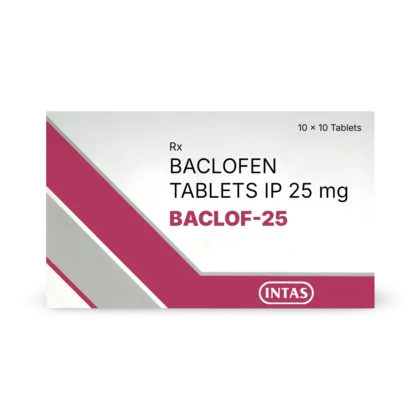
Baclof 25 Mg
Supports reduced muscle stiffness by acting on nerves in the spinal cord to inhibit signal transmission.
Living with spasticity can be an exhausting experience, as persistent muscle stiffness and involuntary spasms often disrupt your ability to move, rest, and manage daily activities with ease. One formulation is listed below, which focuses on the central nervous system to help quiet these signals. It contains baclofen, which serves as a skeletal muscle relaxant.
Supports reduced muscle stiffness by acting on nerves in the spinal cord to inhibit signal transmission.
Spasticity develops when the nerve pathways that control your muscles become damaged or miscommunicate, leading to continuous muscle contraction. This condition often results in tightness, stiffness, and involuntary jerking known as spasms. You might feel persistent resistance when trying to move or notice your limbs stiffening at inconvenient times.
The underlying origin usually involves damage to the central nervous system, including the brain or the spinal cord. Because of this, it is commonly seen in conditions like multiple sclerosis, cerebral palsy, or following a spinal cord injury. Managing these physical challenges requires consistent care that addresses the source of the nerve-muscle disconnect to improve comfort and range of motion.
Treatment for this condition typically focuses on reducing muscle tone and easing the severity of spasms through oral skeletal muscle relaxants. These medications act on the spinal cord to inhibit the nerve impulses that trigger constant muscle contractions. They are intended to lower the intensity of muscle stiffness, making it easier to perform physical therapy and carry out routine movements.
In many regions, including various international markets, these treatments exist as part of a long-term care plan. Healthcare providers often adjust your regimen based on how muscle spasms impact your daily life and your tolerance for these types of medicines. Consistent, daily adherence is common because the medication needs to remain at a steady level within your system to provide continuous relief from rigidity.
Medications for this condition primarily fall into the class of skeletal muscle relaxants. These compounds works by mimicking an inhibitory neurotransmitter, which essentially tells overactive muscles to relax and stop firing involuntary signals. By dampening the connection between the spinal cord and the muscle, these treatments aim to restore more natural movement patterns.
The delivery format for these medications is generally oral, designed for reliable absorption as part of a daily schedule. While all medications in this category target muscle hypertonicity, they differ in how they are processed by the body and their individual dosing requirements. Understanding these differences allows you to have a productive conversation with your provider about which approach works best for your specific nerve-related symptoms.
Starting a muscle relaxant requires an assessment of your existing motor function and overall neurological health. Because these medications work by altering nerve signals, your physical response must be monitored to ensure the dosage correctly balances muscle relaxation with the need to maintain functional movement and balance.
Common reactions to medications in this class may include sedation, dizziness, or temporary weakness as your body adjusts to the changes in nerve activity. Because these medications work throughout the body, you might experience shifts in alertness, particularly in the initial days of a new regimen. It is standard practice to avoid activities requiring high levels of coordination until you understand how the treatment affects you personally.
Muscle relaxants can interact with other substances that affect the central nervous system, such as alcohol or other sedatives. You should monitor your use of concurrent medicines that also promote relaxation, as these can overlap in effect. Your underlying liver and kidney health matters, as these systems are responsible for clearing the medication from your body. Product labeling and verified clinical sources remain the correct references for specific contraindications, interactions, and potential reactions.
This page provides an educational overview of spasticity and the medication categories listed — not medical advice. Individual products differ in active ingredient, formulation, strength, and directions. The page does not authorize self-directed selection, clinical interpretation, or unsupervised use. Readers should review individual product labeling and speak with a healthcare professional when clinical judgment is needed.