
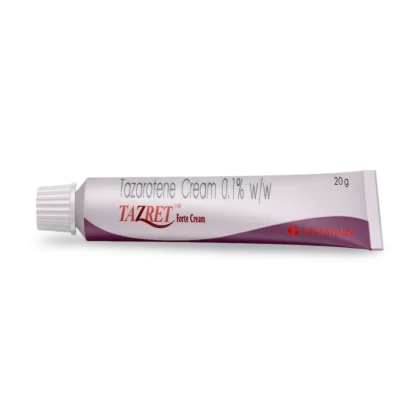
Tazret Forte Cream 0.1% 15 gm
Regulates skin cell turnover to clear blocked pores and address excessive cell pile-up in dermatologic conditions.
Living with the discomfort, itching, and visible impact caused by psoriasis can feel overwhelming and isolating. Whether you are managing frequent flares or working to maintain clearer skin, finding the right type of treatment is an important step. Two formulations are listed below, specifically covering topical retinoids and potent corticosteroids used to calm inflammation.
Regulates skin cell turnover to clear blocked pores and address excessive cell pile-up in dermatologic conditions.
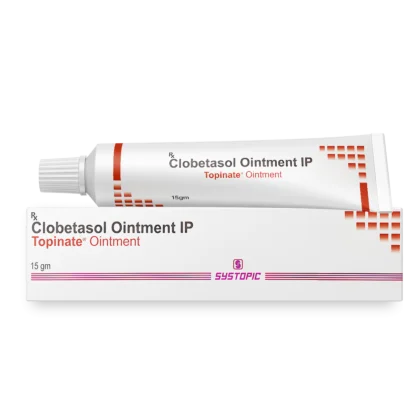
Reduces redness, swelling, and itching by suppressing the body's overactive immune responses in the skin.
Psoriasis is a chronic immune-mediated condition that causes skin cells to multiply up to ten times faster than normal. This rapid overproduction forces cells to build up on the skin’s surface, creating thick, silvery scales and itchy, dry, or red patches. These symptoms often appear in cycles, flaring up for weeks or months before subsiding for a period.
While the condition most commonly affects the elbows, knees, scalp, and lower back, it can develop anywhere on the body. Psoriasis is fundamentally an inflammatory response, meaning the irritation goes deeper than just the visible surface layers. Beyond the physical symptoms, the condition frequently impacts your day-to-day comfort and personal confidence, making consistent support and understanding vital components of your well-being.
Treatment for psoriasis focuses on reducing the speed of skin cell turnover and calming the underlying inflammation. The therapeutic landscape generally relies on topical agents, which you apply directly to affected areas to soothe irritation and flatten raised patches. These medications are categorized based on their mechanism, with two primary types represented in topical care: corticosteroids and topical retinoids.
Across global markets, these treatments are often categorized as prescription-only, meaning a healthcare provider must assess your specific skin type and the severity of your condition before use. Corticosteroids act by suppressing the localized immune reaction to reduce redness, while topical retinoids normalize the growth cycle of skin cells. Because individual sensitivity varies, clinical oversight ensures the potency of the medicine matches the thickness and location of your psoriasis plaques.
Understanding the distinct roles of topical treatments can help you discuss options more effectively with your provider. Topical corticosteroids and retinoids operate through different pathways to address the symptoms of psoriasis.
These are frequently utilized to bring quick relief to active flares. They function by modifying the body’s inflammatory response, which significantly reduces itching, swelling, and redness in treated areas. Because they vary in strength from mild to clinical-grade, they are often chosen based on whether the skin is thin—such as on the face or folds—or thick, like the skin on palms or knees.
Derived from Vitamin A, these medications focus on the root cause by regulating the maturation and growth cycle of skin cells. By encouraging healthier cell turnover, they help prevent the characteristic buildup and plaque formation associated with the condition. They are often integrated into maintenance routines to keep the skin surface smooth and minimize the frequency of new plaques emerging.
It is essential to consider the location of your plaques, as the skin on your face or skin folds absorbs medication differently than the skin on your limbs. Using a high-potency medication on sensitive areas without guidance can lead to unintended thinning or irritation. Always confirm that the strength of the formula is intended for the specific type of plaques you are experiencing.
Topical retinoids are known to occasionally cause initial dryness, peeling, or sun sensitivity as your skin acclimates to the active ingredients. Corticosteroids are generally well-tolerated when used for a limited time, but prolonged use requires monitoring to ensure the skin remains healthy. If you notice persistent burning, stinging, or the appearance of thinning skin, discuss these changes with your doctor to adjust your routine.
Your overall health, including any existing skin infections or sensitivity to specific delivery bases in creams, will influence how a medication performs. Certain formulations may not be suitable if you have broken skin or secondary infections, as these require specific treatment approaches. Product labeling and verified clinical sources remain the correct references for specific contraindications, interactions, and potential reactions.
This page provides an educational overview of psoriasis and the medication categories listed—not medical advice. Individual products differ in active ingredient, formulation, strength, and directions. The page does not authorize self-directed selection, clinical interpretation, or unsupervised use. Readers should review individual product labeling and speak with a healthcare professional when clinical judgment is needed to ensure the chosen treatment is appropriate for their specific health needs.