
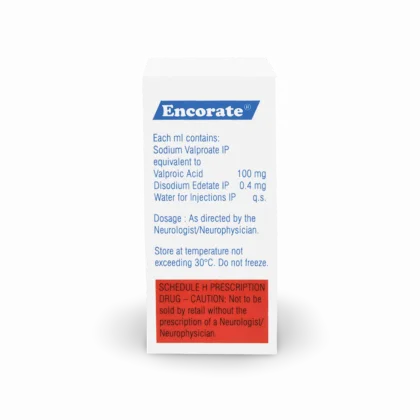
Encorate 100 Mg Injection
Regulates electrical nerve activity in the brain to stabilize mood and manage seizure thresholds effectively.
Managing frequent migraines often feels like an exhausting cycle of disruption and uncertainty. When preventive care is required to reduce the frequency and intensity of these episodes, healthcare providers may turn to specific medications designed to calm overactive nerve signaling. One formulation is listed below, which belongs to the class of antiepileptic medicines used for migraine prevention.
Regulates electrical nerve activity in the brain to stabilize mood and manage seizure thresholds effectively.
Migraine prevention involves the long-term use of medication to reduce the number of headache days rather than simply addressing pain once it has started. Unlike acute medicines taken at the onset of symptoms, these formulations work systematically to modulate the nervous system and decrease the excitability of neurons. This approach aims to restore a sense of predictability to your daily routine.
Beyond the physical intensity of throbbing or pulsating head pain, these episodes often bring waves of sensitivity to light, sound, and smell. For many individuals, the condition is further complicated by nausea or temporary visual disruptions known as aura. By addressing the neurological threshold that triggers these events, preventive treatment seeks to minimize the frequency of these occurrences so that you spend less time in recovery and more time engaged in your life.
The treatment landscape generally focuses on stabilizing the nerve activity that makes the brain more susceptible to migraine triggers. Antiepileptic medicines, originally developed for seizure management, have become a cornerstone of this approach. These agents balance neurotransmitter levels to inhibit the excessive electrical activity that often precedes or accompanies a migraine event.
Doctors in markets such as the United States, United Kingdom, Australia, and Canada often consider these classes when a patient experiences multiple episodes per month or finds that acute treatments alone are insufficient. Choosing a preventive path is a personalized process dependent on your medical history and specific migraine patterns. The goal is to provide a consistent buffer against the onset of symptoms, which may require several weeks of consistent use to achieve full clinical effect.
Medications for migraine prevention work by influencing how nerve cells communicate. Antiepileptic formulations function by shifting the chemical environment within the brain to elevate the threshold at which a migraine is triggered. By smoothing out the excitability of your nerve pathways, these medicines aim to keep the brain in a state of relative stability despite external triggers like stress, hormonal changes, or sensory overload.
These medications are typically intended for daily use, even on days when you feel entirely well. This consistency is fundamental to their preventative mechanism, as they rely on building and maintaining steady levels in your system to offer long-term protection. Understanding that these are not “as-needed” painkillers is a key part of your discussion with a healthcare professional regarding your treatment plan.
Preventive therapies require a thorough review of your medical status, including previous reactions to medication and any coexisting neurological or psychiatric conditions. Because these medicines work systemically to alter nerve signaling, they are not suitable for everyone. A discussion with your provider ensures that the chosen approach complements your physical health rather than conflicting with it.
Every individual responds differently to nerve-stabilizing medications. Some people may notice physical sensations or changes in alertness as their body adjusts to the regulation of nerve activity. These reactions often subside once your body is accustomed to the medication, but if they persist or become burdensome, clinical guidance is necessary to adjust your strategy.
Your liver and kidney function play a significant role in how these medications are processed and cleared from your body. Other medicines you maintain for conditions like anxiety, high blood pressure, or depression may also interact with migraine prevention agents. Product labeling and verified clinical sources remain the correct references for specific contraindications, interactions, and potential reactions.
This page provides an educational overview of migraine prevention and the medication categories listed — not medical advice. Individual products differ in active ingredient, formulation, strength, and directions. The page does not authorize self-directed selection, clinical interpretation, or unsupervised use. Readers should review individual product labeling and speak with a healthcare professional when clinical judgment is needed to determine the appropriate course of treatment.