
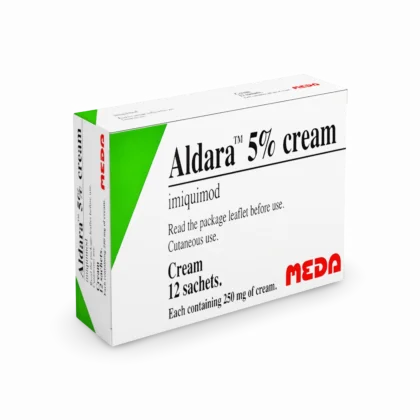
Imiquad Cream 0.5%
Activates your immune system directly at the site of application to recognize and clear abnormal skin cell growths.
Living with genital warts can feel isolating and stressful, but understanding that this is a common, manageable skin condition is a positive first step. Effective treatments exist to address these growths while you navigate your path to recovery. One formulation is listed below, utilizing an immune-boosting approach to help your body manage the underlying virus.
Activates your immune system directly at the site of application to recognize and clear abnormal skin cell growths.
Genital warts are small, fleshy growths or bumps that appear in the genital or anal regions. They are caused by specific strains of the human papillomavirus (HPV), a very common sexually transmitted virus. These growths can vary in size, shape, and frequency, presenting as flat, raised, or cauliflower-like lesions that may cause itching, discomfort, or emotional distress.
Because HPV is highly transmissible through skin-to-skin contact, anyone who is sexually active may be exposed to the virus. Developing warts does not reflect on your personal character or hygiene. While the body’s immune system often clears the virus on its own over time, clinical intervention is frequently requested to remove visible lesions, reduce the risk of transmission, and ease the psychological impact of the condition.
Treatment approaches focus primarily on clearing visible warts and calming the local immune response. The treatment landscape ranges from prescription topical creams that you apply at home to professional procedures performed in a clinical setting. The choice of treatment depends on the size, location, and number of warts present, as well as an individual’s health history.
Topical therapies, such as immune response modifiers, work by stimulating your body’s natural defenses to identify and attack the virus in the affected skin cells. In contrast, clinical procedures—such as cryotherapy, surgical excision, or laser treatment—physically remove or destroy the wart tissue. Patients across international markets often consult a healthcare provider to determine whether a topical, self-administered option or a faster, clinically-led procedure is the most appropriate approach for their situation.
Topical medications for genital warts generally belong to a class of drugs known as immune response modifiers. Unlike treatments that simply burn or cut away tissue, these creams engage your body’s own immune system. By signaling specific cells to produce natural proteins, these medications assist your body in recognizing and eliminating the virus responsible for the growths.
When considering topical formulations, it is useful to understand that these preparations are intended for localized use on the affected skin. Because they act on the immune system, the application site often experiences periodic redness, irritation, or moderate inflammation; this is frequently an indication that the medicine is stimulating the necessary immune activity. It is important to compare these home-based options with clinical alternatives in light of what your provider recommends for your skin sensitivity and the specific manifestation of the virus.
It is essential to have a healthcare professional confirm the diagnosis. Not all genital growths are HPV-related, and using immune-modulating creams on skin that is not affected by viral warts may lead to unnecessary irritation or delayed diagnosis of other skin concerns.
Topical immune response modifiers are designed to trigger a local inflammatory response. This may manifest as swelling, redness, peeling, or tenderness at the application site. While these symptoms can be uncomfortable, they often signify that the treatment is activating your immune system to address the viral lesions.
Your overall health profile influences which treatment is appropriate. Tell your provider if you have any history of autoimmune conditions, skin sensitivities, or if you are currently using other topical products. Product labeling and verified clinical sources remain the correct references for specific contraindications, interactions, and potential reactions.
This page provides an educational overview of genital warts and the medication categories listed — not medical advice. Individual products differ in active ingredient, formulation, strength, and directions. The page does not authorize self-directed selection, clinical interpretation, or unsupervised use. Readers should review individual product labeling and speak with a healthcare professional when clinical judgment is needed.