
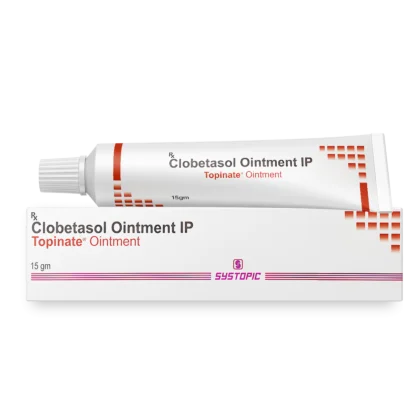
Topinate 0.05% Cream 30 gm
Reduces redness, swelling, and itching by suppressing the body's overactive immune responses in the skin.
Living with eczema can be exhausting, as the persistent itching and inflammation often disrupt sleep and daily comfort. Finding a way to soothe your skin is a significant step toward relief. One formulation is listed below, utilizing a high-potency corticosteroid to assist in managing the redness and discomfort associated with this condition.
Reduces redness, swelling, and itching by suppressing the body's overactive immune responses in the skin.
Eczema, also known as atopic dermatitis, is a complex skin condition that causes the barrier function of your skin to weaken. This impairment allows moisture to escape and makes the skin highly sensitive to external irritants, allergens, and temperature changes. It often manifests as patches of dry, scaly skin that become intensely itchy during flare-ups.
The cycle of itching and scratching frequently damages the skin surface, which can further aggravate the underlying sensitivity. While the condition often appears on the hands, feet, inner elbows, and behind the knees, it can affect any part of the body. Understanding your specific triggers—whether they are certain fabrics, soaps, or environmental stress—is a key part of living with the condition.
Treatment approaches generally focus on reducing inflammation and restoring the skin’s natural moisture barrier. Topical corticosteroids serve as the primary intervention for active flare-ups to quiet the inflammatory response in the skin tissue. These agents work by narrowing dilated blood vessels and inhibiting the release of immune chemicals that cause swelling, redness, and itching.
Across global markets, these potent anti-inflammatory agents are categorized based on their strength. Lower-potency options may be used on sensitive areas like the face or skin folds, while higher-potency creams are reserved for thicker skin or more stubborn patches. Because these are medical-grade treatments, their use is typically guided by a practitioner to ensure the correct strength is applied for the appropriate duration.
Topical corticosteroids, such as the formulation containing clobetasol propionate, are designed to address the acute phase of an eczema flare. By calming the overactive immune response in the skin, these medications help break the persistent itch-scratch cycle that prevents healing. They are most effective when applied thinly to affected areas as directed by your provider.
Beyond medicated creams, your management plan might involve non-medicated moisturizers or barrier creams. These products do not contain active drugs but are essential for sealing in hydration between flare-ups. While topical steroids address the inflammation, consistent daily maintenance with fragrance-free emollients helps support the skin’s long-term health and reduces the frequency of irritation.
It is important to determine the exact nature of your skin irritation, as symptoms of eczema can overlap with other conditions like fungal infections. Applying a corticosteroid to an undiagnosed infection can worsen the underlying issue. Confirming your diagnosis with a healthcare professional ensures that you are using the correct class of medication for your skin’s needs.
Topical steroids are powerful tools that require mindful use. Over-application or extended use beyond the recommended timeframe can lead to skin thinning, stretch marks, or irritation at the application site. Sensitive skin areas, such as the face or groin, require lower-potency formulations to minimize the risk of localized reactions.
While topical medicaments act locally, they still interact with your overall health. Inform your provider about other skin products or medications you are using, as certain combinations might increase the risk of skin absorption. Product labeling and verified clinical sources remain the correct references for specific contraindications, interactions, and potential reactions.
Atopic Dermatitis : A chronic form of eczema often linked to an overactive immune system and family history.
Corticosteroids : A class of anti-inflammatory medications used to reduce skin redness, swelling, and itching.
Flare-up : A period when eczema symptoms like itching and inflammation become sudden and intense.
Emollient : A moisturizing treatment that helps the skin retain water and repairs the barrier function.
This page provides an educational overview of eczema and the medication categories listed — not medical advice. Individual products differ in active ingredient, formulation, strength, and directions. The page does not authorize self-directed selection, clinical interpretation, or unsupervised use. Readers should review individual product labeling and speak with a healthcare professional when clinical judgment is needed.