
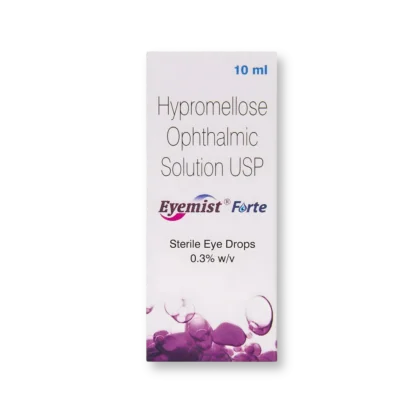
Eyemist Forte 10 ml
Soothes ocular surface dryness by mimicking natural tears to restore consistent moisture and comfort to eyes.
Living with the constant irritation of dry eyes can feel like a heavy weight, impacting how you work, read, and navigate your day. Whether it is a gritty, stinging sensation or persistent fatigue, the lack of sufficient moisture creates a barrier to simple comfort. One formulation is listed below—the lubricant-class eye drop Eyemist Forte.
Soothes ocular surface dryness by mimicking natural tears to restore consistent moisture and comfort to eyes.
Dry eyes develop when your eyes fail to produce enough tears, or when the tears you produce evaporate too quickly. This condition often stems from environmental factors like wind, air conditioning, or extensive screen time, which reduces your blink rate and disrupts the natural tear film. It can also arise from hormonal shifts or underlying factors that alter the quality of your tears.
Beyond the physical ache or sensation of sand in your eyes, this condition often causes blurred vision and a heightened sensitivity to light. You may notice your eyes watering excessively as a reflex to irritation, yet this watery response often lacks the lubricating oils necessary to hydrate the ocular surface. Understanding the nature of your discomfort is the first step toward managing the day-to-day challenges of this condition.
Treating dry eyes typically centers on replenishing the tear film, reducing inflammation, and protecting the ocular surface. The primary approach involves the use of artificial tears and lubricating drops, which act as a supplement to your natural moisture. These solutions vary in viscosity—thinner drops offer immediate relief, while thicker gels or ointments provide longer-lasting coverage, often preferred for nighttime use.
In various global markets, including many locations across Europe, North America, and Asia, these lubricating formulations are widely available as pharmacy-only or over-the-counter options. For persistent cases that do not respond to simple lubrication, healthcare professionals may investigate underlying inflammatory components or structural eyelid issues. Managing the condition often requires a phased approach, starting with frequent lubrication to restore balance and comfort to the eye.
Lubricant-class eye drops serve as the mainstay of treatment for dry eyes. These formulations generally contain demulcents—substances that form a soothing protective film over the eye—along with preservatives or specialized buffers to stabilize the eye environment. By mimicking the viscosity and pH balance of natural tears, these medications assist in maintaining comfort throughout the day.
Delivery formats play a notable role in how effectively a patient manages symptoms. Liquid drops are convenient for frequent dosing during work hours, while heavier, viscous gels create a reservoir on the ocular surface that lasts longer but may temporarily blur vision. Selecting the appropriate texture depends on the severity of your dryness and when during the day you experience the most intense discomfort.
Consulting an eye care professional ensures that your discomfort is indeed caused by dryness rather than an infection, allergic reaction, or structural issue that requires a different approach. Prioritize identifying the root cause of your ocular surface instability before relying on long-term medication use.
While most lubricants are well-tolerated, some individuals may experience temporary stinging or allergic reactions to the preservatives found in multi-dose bottles. Switching to a preservative-free format is a common adjustment for those with sensitive eyes. Excessive use of drops containing certain preservatives can sometimes lead to paradoxical irritation.
Lubricating drops rarely interact with systemic medications, but their application timing can influence the absorption of other eye treatments. If you use multiple types of eye drops, it is standard practice to wait several minutes between applications to ensure each one is absorbed effectively. Product labeling and verified clinical sources remain the correct references for specific contraindications, interactions, and potential reactions.
Demulcent : An active ingredient that forms a soothing, protective film over the eye to relieve irritation.
Tear Film : The complex layer of water, oil, and mucus that coats the eye to maintain health and clarity.
Viscosity : The thickness of a lubricating drop, which determines how long it remains on the surface of the eye.
This page provides an educational overview of dry eyes and the medication categories listed—not medical advice. Individual products differ in active ingredient, formulation, strength, and directions. The page does not authorize self-directed selection, clinical interpretation, or unsupervised use. Readers should review individual product labeling and speak with a healthcare professional when clinical judgment is needed.