
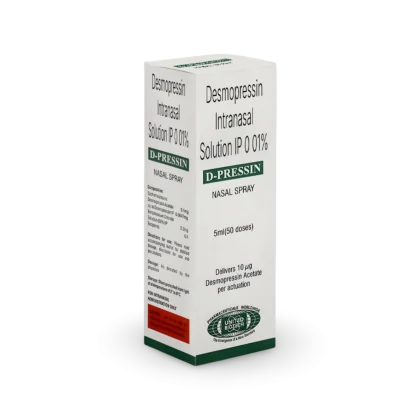
Dpressin Nasal Spray
Mimics a naturally occurring hormone to manage water balance by reducing urine production in the kidneys.
Living with diabetes insipidus can be overwhelming, as your body struggles to maintain the delicate fluid balance essential for daily comfort. Understanding your treatment options provides a sense of control over persistent thirst and the frequent need to use the restroom. The following list includes one formulation—Dpressin Nasal Spray—which contains the synthetic hormone desmopressin to help manage these symptoms.
Mimics a naturally occurring hormone to manage water balance by reducing urine production in the kidneys.
Diabetes insipidus occurs when your body cannot properly regulate fluid levels. Unlike other conditions sharing similar names, it is unrelated to blood sugar levels. Instead, it stems from a deficiency of or an inability to respond to vasopressin, a hormone that signals your kidneys to conserve water.
When this signaling process falters, your kidneys release far more water than your body needs, leading to the rapid production of large volumes of diluted urine. This constant fluid loss drives an unquenchable thirst, often leaving you feeling exhausted and constantly tethered to a water source. It affects your quality of life by disrupting sleep and limiting your ability to move through your day comfortably.
Management focuses on replacing the missing vasopressin signal so your kidneys can return to normal function. The primary approach involves using synthetic analogues that mimic the body’s natural hormone to reduce urine output. These treatments effectively interrupt the cycle of excessive thirst and fluid loss, allowing for better hydration management.
Access to these treatments often requires professional guidance to ensure the dose aligns with your specific needs. Patients across international markets often consult a specialist to establish a baseline before coordinating their ongoing care. Integrating these treatments into your life is a collaborative process between you and your healthcare team to ensure consistent results.
Treatment primarily centers on desmopressin, a laboratory-created version of the body’s natural antidiuretic hormone. Because this hormone is broken down by the digestive system, it is rarely administered as a standard swallowed pill. Instead, it is delivered through formats that enter the bloodstream more directly.
Nasal sprays provide a common method for administering desmopressin. By applying the medication to the nasal lining, the active component enters your system quickly to act on your kidneys. This form is often favored for its precision, as the hormone acts directly on the receptors responsible for liquid retention.
Other delivery forms may include tablets that dissolve under the tongue or specialized liquids, depending on individual requirements. All these methods share the same goal: replacing the missing hormone signal. Choosing the right format is an ongoing discussion with your provider to find what fits your routine and ensures your fluid levels remain stable throughout the day and night.
Addressing fluid balance requires clear communication with your doctor, as your current hydration habits and kidney function play a significant role in how these medications work. Ensure your provider evaluates your baseline electrolyte levels before you begin any therapy to mimic vasopressin.
Hormone replacement therapies demand careful monitoring to avoid unintended fluid retention. If your body retains too much water, you may experience headaches, nausea, or swelling, which are signs that your fluid intake needs adjustment in relation to the medication dose. Recognizing these sensitivity markers is part of achieving a stable, comfortable balance.
Certain medicines can interact with hormone replacements or change how your body processes water. Be transparent with your provider about all supplements or prescribed treatments you use for other health concerns. Product labeling and verified clinical sources remain the correct references for specific contraindications, interactions, and potential reactions.
Antidiuretic Hormone : A substance produced by the brain that signals the kidneys to conserve water.
Desmopressin : A synthetic medication that acts as an analogue to the body’s natural antidiuretic hormone.
Vasopressin : The primary hormone responsible for regulating the body’s water retention and urine concentration.
This page provides an educational overview of diabetes insipidus and the medication categories listed—not medical advice. Individual products differ in active ingredient, formulation, strength, and directions. The page does not authorize self-directed selection, clinical interpretation, or unsupervised use. Readers should review individual product labeling and speak with a healthcare professional when clinical judgment is needed.