
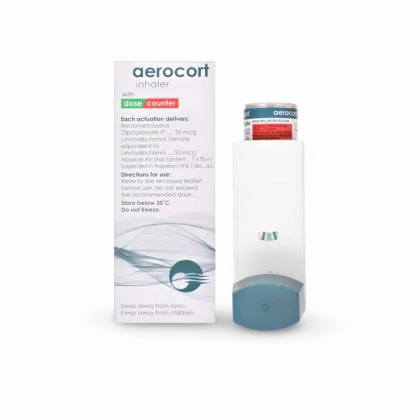
Aerocort Inhaler 50 mcg + 50 mcg
Delivers a dual-action approach to airway management by reducing inflammation and opening restricted breathing passages.
Living with asthma often means navigating unpredictable moments where breathing feels difficult, tight, or restricted. This chronic condition causes your airways to become inflamed and narrowed, often reacting sensitive to environmental triggers. Seventeen formulations are listed below, covering inhaled corticosteroids, short-acting and long-acting bronchodilators, and dual-action combination inhalers containing both steroid and bronchodilator components.
Delivers a dual-action approach to airway management by reducing inflammation and opening restricted breathing passages.
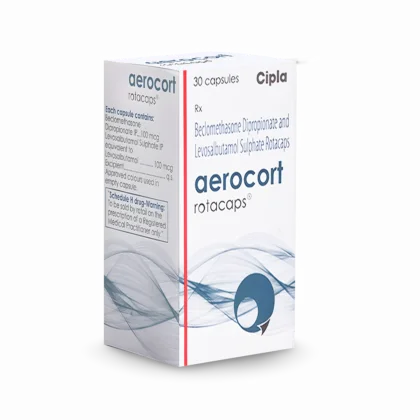
Combines a corticosteroid and a bronchodilator to both reduce airway inflammation and open restricted breathing passages.

Relaxes the muscles in your airways to keep them open for easier breathing during respiratory flare-ups.
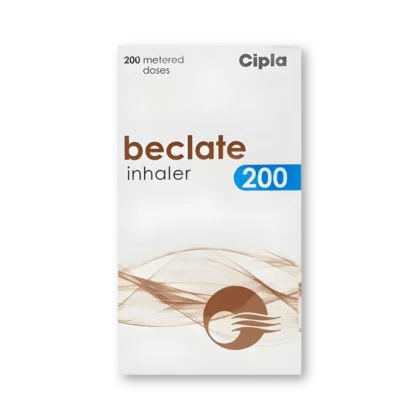
Reduces airway inflammation to prevent breathing difficulty and manage chronic respiratory conditions effectively.

Dual-action respiratory support that opens airways and relaxes muscles to improve breathing during chronic respiratory conditions.
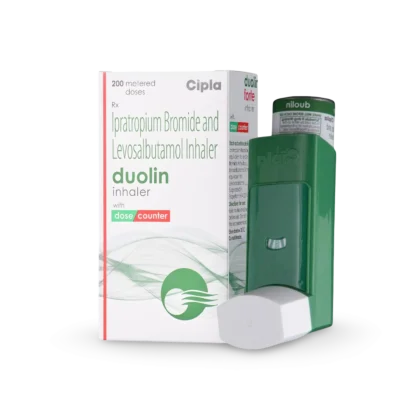
Opens constricted airways and eases breathing by relaxing bronchial muscles through dual-action lung relief.
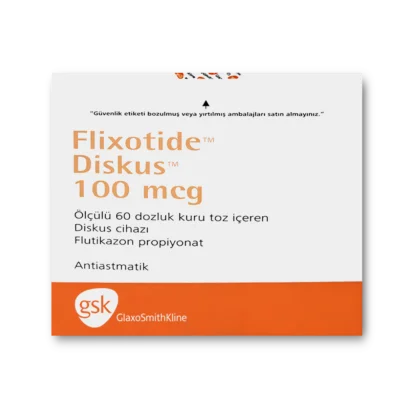
Reduces inflammation in the airways to prevent breathing difficulties and persistent symptoms associated with respiratory conditions.

Reduces inflammation in the airways to improve airflow and prevent symptoms like wheezing, tightness, and coughing.
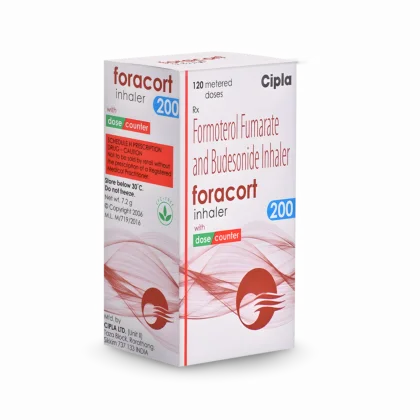
Opens constricted airways and reduces inflammation within the lungs to assist with easier breathing and airflow.

Combines a corticosteroid to reduce inflammation with a long-acting bronchodilator to open airways for easier breathing.

A combination inhaler that relaxes airways and reduces inflammation to support easier breathing in chronic conditions.
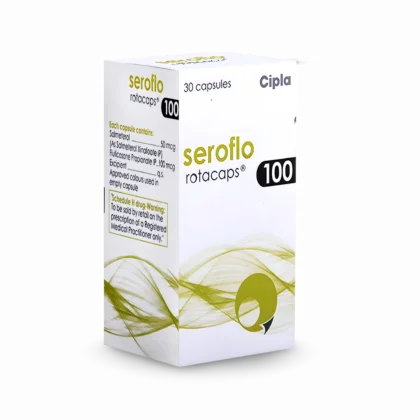
Supports clear airways by combining a long-acting bronchodilator to relax muscles and a steroid to reduce inflammation.
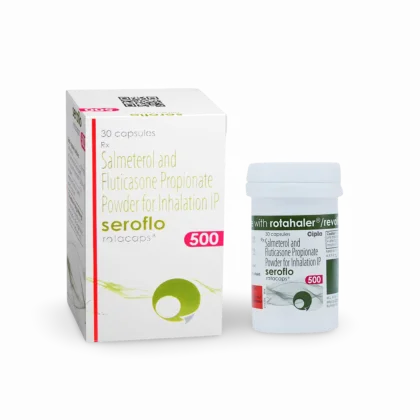
Combines a long-acting bronchodilator with an anti-inflammatory steroid to open airways and reduce chronic lung inflammation.
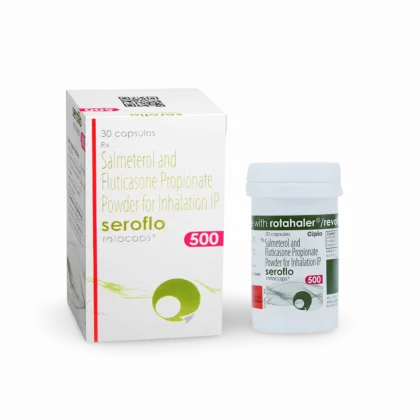
Opens constricted airways and reduces chronic inflammation in the lungs to support easier, more regular breathing.

Addresses airway inflammation and constriction with a dual-acting combination to support easier breathing in chronic respiratory conditions.
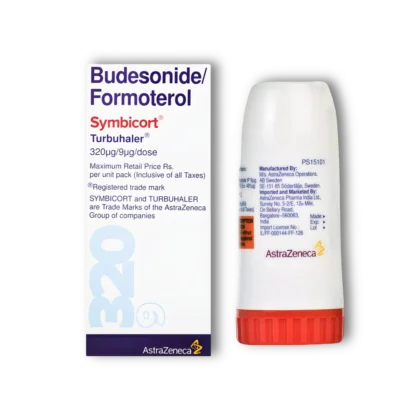
Controls inflammation and opens airways to facilitate easier breathing and reduce the frequency of respiratory flare-ups.
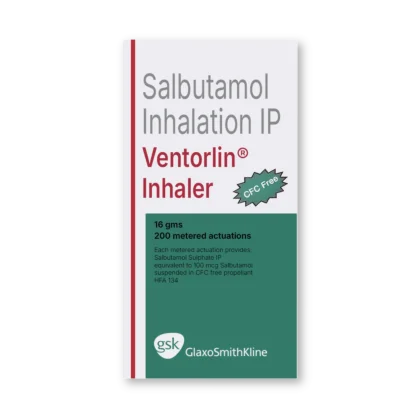
Relaxes the smooth muscles in your airways to keep passages open and ease shortness of breath.
Asthma is a long-term respiratory condition characterized by recurring bouts of wheezing, chest tightness, and coughing. These symptoms arise because the lining of your bronchial tubes becomes inflamed, causing the surrounding muscles to tighten and excess mucus to build up. This temporary narrowing makes it challenging for air to flow easily in and out of your lungs.
Individuals may notice that their symptoms flare up in response to specific triggers like cold air, exercise, pollen, or respiratory infections. Because asthma severity varies significantly between people, an approach centered on understanding these patterns is essential. While the condition remains a persistent feature of daily life for many, consistent management strategies assist in maintaining clearer breathing and reducing the frequency of symptom episodes.
Managing asthma typically involves a combination of long-term control medicines to reduce underlying inflammation and rescue medicines to address sudden symptoms. Pharmacological approaches usually rely on inhalation as the primary delivery method, ensuring the medicine reaches the airways directly. Global regulatory standards generally categorize these treatments as prescription-only, reflecting the need for a tailored plan based on your specific airway reactivity.
In many international markets, maintenance treatment often centers on inhaled corticosteroids, which work to dampen the immune response and reduce swelling over time. When these are not sufficient, combination inhalers—which pair a corticosteroid with a long-acting bronchodilator—are frequently used to provide both anti-inflammatory action and extended airway relaxation. For sudden, acute symptoms, short-acting bronchodilators serve as the standard “rescue” option to quickly open the airways.
Determining which type of treatment fits your needs often involves distinguishing between those that provide daily control and those designed for immediate relief. Inhaled corticosteroids are considered the cornerstone of daily prevention, as they address the root inflammation that causes airways to remain sensitive. These medications require regular, consistent use to be effective, rather than providing immediate relief at the moment of symptoms.
Bronchodilators, conversely, work by relaxing the smooth muscles surrounding the bronchial tubes. Short-acting bronchodilators, such as those containing salbutamol, provide rapid assistance during a flare-up by opening the airways quickly. Long-acting versions are usually reserved for daily use in combination with steroids to help maintain airway openness and prevent future symptom progression throughout the day or night.
Combination products utilize both of these mechanisms in one device. These formulations are designed to simplify daily regimens, as they provide both the long-term anti-inflammatory support of a corticosteroid and the consistent airway relaxation provided by long-acting bronchodilators. Each device type, whether a pressurized metered-dose inhaler or a powder-based delivery system, requires specific technique to ensure the medication reaches the intended area of the lungs.
Initiating any new asthma treatment requires a clear understanding of your current lung function and the specific triggers that affect you. You should discuss your medical history, including any previous complications with respiratory medications, with your healthcare provider. Ensuring your device choice aligns with your ability to perform the necessary inhalation technique is vital for treatment success.
Inhaled corticosteroids may be associated with local reactions in the mouth or throat, such as hoarseness or fungal infections, which are often minimized by rinsing after use. Bronchodilators might cause temporary sensations of jitteriness, increased heart rate, or shaking, particularly when first starting a new formulation or during frequent use. These reactions are typically related to how your body processes the active ingredients in the inhaler.
Other health conditions, particularly cardiovascular concerns or high blood pressure, can influence how bronchodilator-class medications affect you. Inform your provider about all medicines you are currently taking, as some substances may interact with the stimulants or steroids used in asthma management. Product labeling and verified clinical sources remain the correct references for specific contraindications, interactions, and potential reactions.
Bronchodilator : A class of medication that eases breathing by relaxing the smooth muscle tissue around the airways.
Corticosteroid : A class of medication used to reduce inflammation and sensitivity within the airway linings on a long-term basis.
Inhalation : The process of delivering medication directly into the lungs through a device like an inhaler or dry powder dispenser.
This page provides an educational overview of asthma and the medication categories listed — not medical advice. Individual products differ in active ingredient, formulation, strength, and directions. The page does not authorize self-directed selection, clinical interpretation, or unsupervised use. Readers should review individual product labeling and speak with a healthcare professional when clinical judgment is needed.