
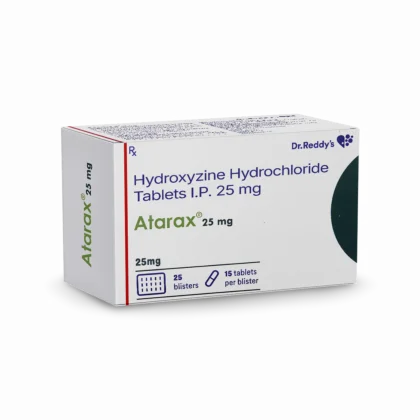
Atarax 25 Mg
Reduces nerve signals that cause itching and promotes a calming effect by targeting chemical receptors in the brain.
Living with persistent worry or a sense of apprehension can feel overwhelming, often creating a barrier to your daily rhythm and inner peace. These experiences are common, and medical support plays a meaningful role in stabilization. Two formulations are listed below: Atarax (hydroxyzine), an antihistamine, and Venlafaxine, a selective serotonin and norepinephrine reuptake inhibitor.
Reduces nerve signals that cause itching and promotes a calming effect by targeting chemical receptors in the brain.
Alters specific chemical signals in the brain to support stable mood and reduce persistent anxious feelings.
Anxiety functions as the body’s natural response to stress, preparing you to react to perceived challenges. When this response becomes disproportionate or impossible to switch off, it develops into a state of constant apprehension. Many people describe this as a feeling of dread, restlessness, or a racing heart that persists even when no direct threat exists.
These feelings often manifest physically, leading to muscle tension, difficulty focusing, and sleep disturbances. Because it operates on both a physical and psychological level, the condition affects everyone differently. Understanding your specific symptoms is a significant step toward finding the right support, as addressing these patterns often involves both behavioral changes and, when appropriate, medical intervention.
Managing these states typically involves a combination of strategies designed to restore balance to your nervous system. Healthcare providers across global markets may suggest psychotherapy, such as cognitive behavioral therapy, to identify thought patterns. When symptoms are particularly disruptive, certain classes of medications are used to help moderate the chemical pathways that regulate mood and stress responses.
Treatment approaches generally focus on two primary objectives: providing immediate, short-term relief or establishing long-term stability. While some classes work by calming the central nervous system, others aim to adjust the balance of neurotransmitters—the brain’s chemical messengers—over a sustained period. Because access regulations change depending on your region, it is essential to coordinate with a local medical provider to determine which diagnostic path and treatment class fits your specific health profile.
The medications listed here represent distinct approaches to symptom management. Understanding the primary class for each can help you orient yourself before your next conversation with a healthcare provider.
Hydroxyzine, found in products like Atarax, is frequently employed for its calming properties. These medications target specific receptors in the brain to reduce activity in the central nervous system, which can provide a soothing effect during periods of high tension. They are often used to address immediate symptoms of distress rather than long-term mood regulation.
Venlafaxine belongs to a class known as SNRIs, which are typically used for broader or chronic management. By focusing on two key neurotransmitters—serotonin and norepinephrine—this class supports the brain in maintaining more consistent emotional stability over time. Unlike short-acting medications, these generally require consistent use as directed to see their full effect on your daily well-being.
It is vital to provide your healthcare provider with a full medical history, including any previous experiences with mood-altering medications. Certain individuals may be more sensitive to the sedative effects of antihistamines or the initial adjustment period associated with SNRIs. Understanding your baseline health ensures that any chosen direction is tailored to your specific physical needs.
Every medication class carries a potential for side effects, which vary based on your physiology and the specific drug. You might notice changes in energy levels, sleep patterns, or physical comfort during the first few weeks of a new regimen. Observing these changes and reporting them to your practitioner is a necessary part of the process, as it allows for adjustments to maintain your comfort.
Many substances, including alcohol, over-the-counter supplements, and other prescribed medications, can significantly alter how your body processes anxiety treatments. Combining treatments without oversight can lead to unexpected effects on your heart rate, blood pressure, or mental clarity. Product labeling and verified clinical sources remain the correct references for specific contraindications, interactions, and potential reactions.
This page provides an educational overview of anxiety and the medication categories listed — not medical advice. Individual products differ in active ingredient, formulation, strength, and directions. The page does not authorize self-directed selection, clinical interpretation, or unsupervised use. Readers should review individual product labeling and speak with a healthcare professional when clinical judgment is needed.