
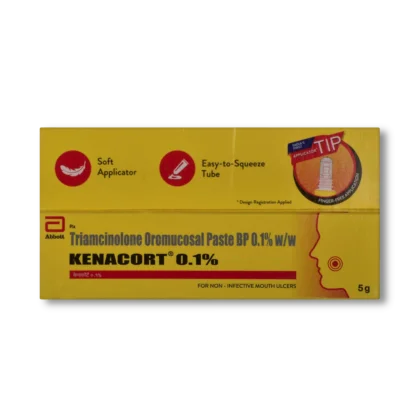
Kenacort Cream 0.1% (5 Gm)
Reduces skin inflammation and swelling by shifting the immune response at the surface level where applied.
Living with an allergic skin condition often means navigating a cycle of persistent itching, redness, and inflammation that affects your comfort and confidence. When your immune system overreacts to an allergen, your skin barrier can become distressed. Two formulations are listed below, including the topical corticosteroid Kenacort Cream (0.1%) and the injectable corticosteroid Kenacort (40 mg/1 ml).
Reduces skin inflammation and swelling by shifting the immune response at the surface level where applied.
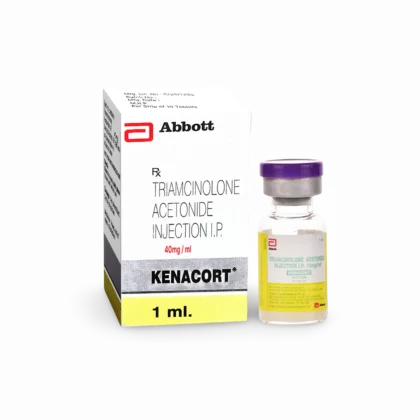
Reduces inflammation and suppresses overactive immune responses in various tissues to ease pain and swelling.
Allergic skin conditions arise when your body’s defense system identifies a harmless substance—such as pollen, dyes, or fabrics—as a threat. This triggers an inflammatory response that manifests as rashes, hives, or swelling. These conditions, which include contact dermatitis and eczema, often thrive on cycles of irritation where scratching further damages the skin’s integrity.
Understanding that your skin is reacting to an external or internal trigger is the first step toward finding relief. Whether these reactions are acute, appearing suddenly after exposure, or chronic, requiring ongoing management, the physical discomfort can be significant. By identifying the triggers and managing the inflammatory response, you can begin to restore the skin’s natural comfort and reduce the urge to scratch.
Treatment for allergic skin conditions typically focuses on quieting the immune system’s inflammatory response in the affected area. Corticosteroids remain the primary class of medications used to address these symptoms. These compounds function by mimicking hormones that suppress inflammation, effectively reducing the swelling, redness, and itching associated with allergic flares.
Access to these treatments varies across international markets such as the United States, United Kingdom, Australia, and Canada, where providers evaluate the severity and site of the reaction before prescribing. Topical applications are often the first choice for localized irritation, while injectable forms are typically reserved for more systemic or persistent inflammatory responses that do not respond to surface-level therapy.
Medications for these conditions are generally categorized by how they are delivered to your system. Understanding the difference between these forms can help you have a more productive conversation with your healthcare provider about your specific symptoms.
These formulations are designed for application directly onto the skin. They are used to treat localized areas of inflammation, such as patches of eczema or contact dermatitis. By applying the medication to the surface, you deliver the anti-inflammatory effect directly where the skin is irritated, which often helps in managing acute triggers without affecting the whole body.
Injectable forms are used when an allergic reaction is more widespread or involves deep inflammation that topical creams cannot effectively reach. These medications are processed by the body to provide a systemic effect, tempering the immune response from within. This form is often utilized for significant flare-ups that require a more robust intervention under professional supervision.
Reviewing your medical history with a provider is essential, as corticosteroids can affect underlying health conditions. It is important to disclose any history of infections, diabetes, or hypertension, as these may influence how your body responds to steroid therapy.
Topical use is generally associated with minimal systemic absorption, though prolonged application can cause skin thinning or irritation. Injectable forms carry a higher potential for systemic effects, which is why they are typically evaluated on a case-by-case basis. Observing your skin’s reaction during initial use helps in identifying if a specific formulation is well-tolerated.
Corticosteroids may interact with other medications, including those that suppress the immune system or other anti-inflammatory drugs. Always ensure your provider is aware of every medication or supplement you use, as this helps prevent unwanted interactions. Product labeling and verified clinical sources remain the correct references for specific contraindications, interactions, and potential reactions.
This page provides an educational overview of allergic skin conditions and the medication categories listed—not medical advice. Individual products differ in active ingredient, formulation, strength, and directions. The page does not authorize self-directed selection, clinical interpretation, or unsupervised use. Readers should review individual product labeling and speak with a healthcare professional when clinical judgment is needed.