
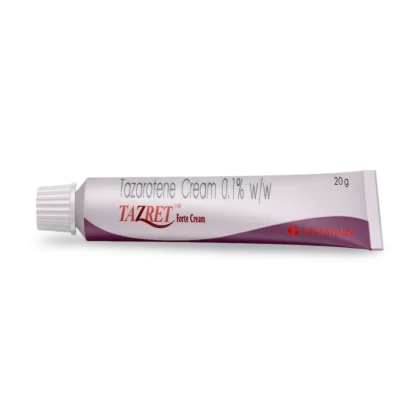
Tazret Forte Cream 0.1% 15 gm
Regulates skin cell turnover to clear blocked pores and address excessive cell pile-up in dermatologic conditions.
Tazarotene — famously known as the active compound in Tazret and Tazorac — is a synthetic retinoid used for skin health. It works by normalizing how your skin cells grow and shed. One formulation is listed below, providing a topical option for those managing chronic skin conditions through their existing care plans.
Regulates skin cell turnover to clear blocked pores and address excessive cell pile-up in dermatologic conditions.
Tazarotene belongs to the class of medications called retinoids. Think of it as a tool that communicates directly with your skin cells, telling them how to mature and shed properly. While many topical treatments work by drying out the surface or washing away bacteria, this compound goes deeper to influence the life cycle of the cells themselves.
Because it is a synthetic, third-generation retinoid, it is engineered to be highly specific. It targets particular receptors in your skin that govern inflammation and cell proliferation. By preventing the buildup of dead skin cells, it keeps pores clear and skin surface textures more consistent. You will find it in various topical forms, such as creams and gels, often selected based on your skin type and the area being treated.
Tazarotene is a potent medicinal compound subject to healthcare regulations in the United States, United Kingdom, Australia, and Canada, as well as many other international markets. Because of its strength and the way it affects skin biology, it is typically classified as a prescription-only medication.
Access requirements can shift depending on where you are located. Some regions require a formal referral from a dermatologist, while others permit qualified healthcare providers to authorize its use during a standard clinical assessment. Always ensure you are sourcing your supply through legitimate channels that adhere to the legal standards of your specific country.
This medication is primarily used to address symptoms associated with acne vulgaris and plaque psoriasis. For acne, it works to reduce the formation of comedones, or clogged pores, which helps lower the frequency of breakouts. By encouraging your skin to renew itself, it prevents the clumping of cells that lead to visible congestion.
In the context of plaque psoriasis, tazarotene manages the rapid overproduction of skin cells that creates thick, scaly patches. It assists in slowing down this cycle, which helps reduce the thickness and redness of the affected areas. Many people find it useful for maintaining clearer skin once the primary inflammatory phase has been brought under control.
When you apply tazarotene, your skin absorbs the compound, which then binds to specific retinoic acid receptors in your cells. This binding action essentially resets the genetic expression of the cell, correcting abnormal development. It shifts the cellular metabolism away from a state of rapid, chaotic division toward a more balanced, regulated rhythm.
By normalizing this turnover, the skin sheds dead layers more effectively rather than trapping them inside a pore or building them up into a psoriatic plaque. The result is a smoother surface over time, as the structural integrity of your skin barrier is better supported through this regulated growth process.
Tazarotene is classified as a third-generation acetylenic retinoid. Retinoids are derivatives of Vitamin A that have been refined in a lab to provide more targeted effects with higher potency. Unlike earlier generations of retinoids, which often affected a broader range of receptors, this generation is designed to be more selective, focusing on those linked to skin surface regulation.
This specificity is what makes the class effective for chronic conditions. By concentrating its activity where it is needed most, the compound can influence skin architecture without broad, systemic impact. This makes it a foundational choice in dermatology for managing long-term skin health.
Verify that the concentration you have is the one intended for your condition, as potency varies. Inform your provider if you have sensitive skin, are planning to become pregnant, or are currently nursing, as retinoids have specific safety considerations during these times.
Common responses include dryness, redness, or mild peeling during the first few weeks of use. Your skin will likely need time to adjust to the increased cell turnover rate, so introducing the product gradually can help your tolerance levels.
Avoid combining this with harsh exfoliating scrubs or other intensive skin treatments, as this can increase irritation beyond a manageable level. Sun sensitivity is a notable factor when using this class of medication, requiring consistent sun protection measures. Product labeling and verified clinical sources remain the correct references for specific contraindications, interactions, and potential reactions.
This content provides an educational overview of tazarotene and is not medical advice. Individual products containing this ingredient may differ in formulation, strength, and specific directions. This page does not authorize clinical application, self-directed interpretation, or unsupervised use of any medication. Readers should always review individual product labeling and speak with a qualified healthcare professional when clinical judgment is needed for their particular health situation.