
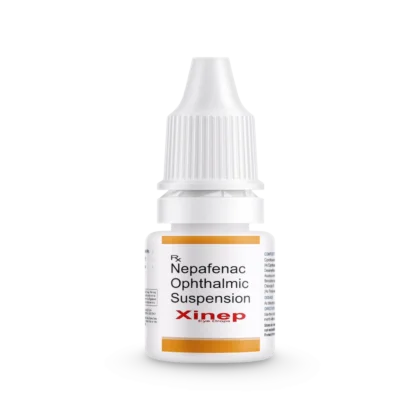
Xinep 5 ml
Reduces inflammation and eye pain by inhibiting enzymes involved in the production of prostaglandin messengers.
Nepafenac is a non-steroidal anti-inflammatory drug (NSAID) used in eye care, specifically to help manage pain and inflammation after cataract surgery. It is the active ingredient in medications like Nevanac. One formulation, Xinep, is currently listed for those who need access to this particular anti-inflammatory treatment for their post-operative eye recovery.
Reduces inflammation and eye pain by inhibiting enzymes involved in the production of prostaglandin messengers.
You might think of eye drops as simple tools, but nepafenac works at a microscopic level to change how your eye responds to trauma. It belongs to the class of drugs known as NSAIDs, which are commonly used to block chemical messengers that signal pain and swelling. While many people use ibuprofen or similar drugs for body aches, this compound is formulated specifically to be absorbed by your eye tissues.
When your eye undergoes a procedure like cataract surgery, your body naturally releases substances called prostaglandins, which cause swelling and pain. Because this ingredient is designed to penetrate the surface of your eye, it reaches the site of the inflammation quickly. This helps you manage discomfort without the need for systemic oral medications, keeping its effects localized almost entirely to where you need them most.
Products containing this ingredient are strictly regulated as therapeutic agents because they interact with complex inflammatory pathways. In most global markets, including the United States, United Kingdom, Australia, and Canada, these drops are classified as prescription-only medication. This status is standard for ophthalmic anti-inflammatories, as they require professional oversight to ensure they are the right choice for your specific eye condition.
Regulatory bodies in the mentioned regions monitor these products to ensure high manufacturing standards for sterility and concentration. Because eye health is delicate, you will typically find that pharmacies in these jurisdictions will not dispense these drops without a verifiable request from your provider. Always check your local pharmacy regulations if you are moving between regions, as specific requirements for access can shift depending on where you are currently located.
The primary use for these drops is the treatment of pain and localized swelling following cataract surgery. Many practitioners coordinate treatment to begin shortly before your procedure and continue for several weeks afterward. By staying consistent with the application as outlined by your eye care specialist, you address the inflammatory response before it causes significant discomfort.
Additionally, this medication assists in maintaining the integrity of the eye surface during the healing window. By curbing the production of inflammation-triggering chemicals, it allows your eye to recover in a more controlled environment. It is not intended for long-term daily use outside of specific post-operative recovery windows or other conditions evaluated by your medical provider.
This ingredient operates as a pro-drug, which essentially means it is inactive when you first apply it to your eye but transforms into an active chemical inside your ocular tissues. Once it converts, it targets an enzyme called cyclooxygenase, or COX. By inhibiting this enzyme, it cuts off the production of inflammatory prostaglandins at the source.
Because it is specially designed to enter your eye, it maintains a higher concentration where pain actually originates. This refined delivery method allows for effective relief while minimizing the levels that reach your general circulation. You get the benefit of inflammation control exactly where your surgeon needs it most, rather than dealing with the systemic impact of oral pain relievers.
Always confirm that your eye is free from current infections, as anti-inflammatory drops can sometimes mask symptoms of other underlying issues. If you have a history of sensitivity to other NSAIDs, such as aspirin or ibuprofen, speak with your provider about whether these drops are appropriate for your specific needs.
Some people report transient stinging or burning immediately after applying the drops. Other common experiences include blurred vision upon application, which usually clears quickly, or a sensation of a foreign object in the eye. If you notice persistent redness or discharge, it may indicate a need to adjust your recovery plan.
Tell your provider about any other eye drops you are currently using, as timing the application of different products is essential to ensure they work correctly. If you are pregnant or breastfeeding, discuss the situation with your health team, as the use of ophthalmic NSAIDs requires careful consideration of the potential for absorption into the bloodstream.
Product labeling and verified clinical sources remain the correct references for specific contraindications, interactions, and potential reactions.
The information provided serves as an educational overview of nepafenac and is not medical advice. Individual products containing this ingredient may differ in concentration, formulation, and specific use directions. This page does not authorize clinical application, self-directed interpretation, or unsupervised use of ophthalmic medications. Please review individual product labeling and speak with a healthcare professional when clinical judgment is needed to ensure your ocular health is properly managed during recovery.