
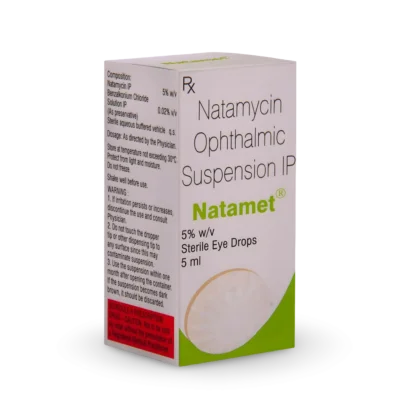
Natamet 5% 3 ml
Targets fungal growths in ocular tissue by binding to sterols and disrupting fungal cell wall integrity.
Natamycin (Natamet) is a specialized antifungal compound often used in ocular health to address stubborn fungal infections affecting the eye. The formulation listed below provides a targeted approach for localized treatment. It is one formulation currently available, designed to act directly where the infection is located.
Targets fungal growths in ocular tissue by binding to sterols and disrupting fungal cell wall integrity.
Natamycin is a naturally occurring antifungal agent derived from the bacterium Streptomyces natalensis. You will most often encounter it in a clinical context as a concentrated ophthalmic suspension. Its primary role involves targeting fungal keratitis and other surface-level fungal infections of the eye, which are often challenging to manage due to the unique environment of the cornea.
Researchers and clinicians value this compound because it works specifically against a wide range of yeasts and filamentous fungi. By applying this as a suspension, you ensure that the active compound reaches the affected tissue directly. This approach minimizes the need for internal medications while focusing treatment precisely on the site of the infection.
Products containing natamycin are subject to strict healthcare regulation across global markets, including the United States, United Kingdom, Australia, and Canada. Because it is used to manage serious eye infections, it is typically classified as a prescription-only medication.
Regulatory standards for ophthalmic suspensions remain high across the United Kingdom and Australia, requiring oversight to ensure proper use. If you are accessing this medication through international markets, requirements for labeling and clinical validation may change based on local pharmacy laws. Always verify that your specific supply meets the regulatory standards of your region.
This medication is used to address fungal infections of the eye, such as fungal blepharitis, conjunctivitis, and keratitis. Fungal infections in these regions can be persistent, and natamycin assists by creating an environment where the fungus can no longer thrive or replicate.
Clinicians typically use this when diagnostic tests confirm a fungal pathogen as the source of inflammation or tissue damage. It serves as an essential tool in ophthalmology for protecting vision against the progression of fungal growth, which can otherwise lead to significant ocular distress or impairment if left unmanaged.
Natamycin works by binding to sterols—specific fat-like substances found in the cell membranes of fungi. When the compound locks onto these sterols, it effectively creates a physical disruption in the membrane, which is vital for the survival of the fungus.
Once the membrane is compromised, the fungal cell can no longer maintain its internal balance or protect itself from the surrounding environment. This process essentially halts the growth of the fungi, allowing your body’s natural defense mechanisms to clear the remains of the infection. Because it focuses on these specific sterol structures, it is highly effective at stopping the proliferation of yeast and mold.
Natamycin belongs to the polyene class of antifungal medications. These compounds are known for their ability to connect with membrane structures, a characteristic that differentiates them from other antifungals that might target enzyme production or DNA replication.
This class is highly regarded for its efficacy in treating superficial infections. While some antifungals in this family are intended for systemic use, natamycin is primarily reserved for localized, surface-level applications. Its stability and potency in these environments make it a reliable choice for managing distinct fungal challenges.
Before starting this medication, ensure you are not sensitive to polyene antifungals. Inform your provider if you have a history of corneal injuries or if you are currently using other eye drops, as these can dilute the suspension or change how well it absorbs into the tissue.
You might notice mild stinging or redness upon application, which is common with ophthalmic suspensions. More pronounced reactions, such as persistent irritation or blurred vision that does not resolve quickly, require professional evaluation to ensure the fungal infection is responding correctly.
Avoid wearing contact lenses while using this suspension, as the lenses may trap the medication or be damaged by the suspension components. Your liver and kidney function do not typically affect topical application, but your overall ocular health status is a major factor in how quickly you might see improvement.
Product labeling and verified clinical sources remain the correct references for specific contraindications, interactions, and potential reactions.
This information provides an educational overview of natamycin and is not medical advice. Individual products containing this ingredient may differ in formulation, strength, and directions. This page does not authorize clinical application, self-directed interpretation, or unsupervised use. You should review individual product labeling and speak with a healthcare professional when clinical judgment is needed to address any eye-related infection or symptom.