
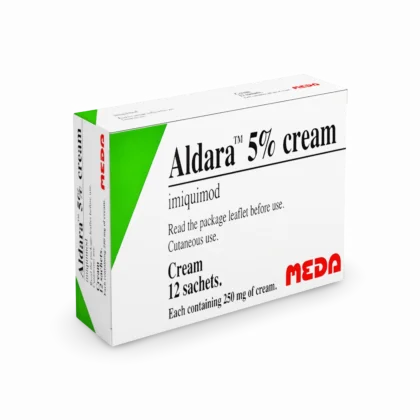
Imiquad Cream 0.5%
Activates your immune system directly at the site of application to recognize and clear abnormal skin cell growths.
Imiquimod (Aldara) is an immune response modifier cream used to treat certain skin conditions and superficial growths. You will find one formulation listed below, Imiquad Cream 0.5%, which is a commonly utilized topical preparation designed for targeted application on affected skin areas to support natural healing processes.
Activates your immune system directly at the site of application to recognize and clear abnormal skin cell growths.
Imiquimod is a synthetic molecule classified as an immune response modifier. Unlike traditional topical treatments that might simply dry out a lesion, this compound works by encouraging your skin to produce its own natural defense proteins. When applied, it signals your local immune system to identify and address abnormal cell behavior.
Because it serves as a signaling agent rather than a direct toxin or antibiotic, it is frequently used for localized skin concerns where your body needs a bit of help recognizing unhealthy tissue. Its primary role involves stimulating cytokines, which are small proteins that control how your cells communicate and respond to threats like viral infections or precancerous growths.
Products containing this compound are considered pharmacy-regulated medications across the United States, United Kingdom, Australia, Canada, and other international markets. Because the molecule actively triggers an immune reaction within the skin, it is generally treated as a prescription-only item to ensure that you use it on the correct type of skin lesion.
Regulations often require that a healthcare provider verifies the nature of your skin condition before this treatment is recommended. This oversight is necessary because the cream works by creating a deliberate local inflammatory response. If you are browsing for this medication online, you will notice it is consistently classified as a professional-grade topical therapy rather than an over-the-counter cosmetic product.
This medication is primarily used to address actinic keratosis, which are rough, scaly patches on sun-damaged skin. By stimulating the immune system locally, it helps your body clear out these abnormal cells over several weeks of consistent use.
Additionally, you might see this ingredient applied in the treatment of superficial basal cell carcinoma and specific forms of external genital warts. It assists by promoting an inflammatory environment that targeted immune cells use to break down the unwanted lesion. In all instances, it is intended strictly for external use on the skin surface.
When you rub the cream into the affected area, the active ingredient binds to specific receptors on your immune cells. Think of these receptors as tiny switches that, once flipped, tell your body to ramp up its production of interferons. Interferons are the “warning signals” your immune system sends to alert nearby cells that a threat is present.
This surge in localized activity helps your cells recognize and break down the irregular tissue. Because the effect is focused only on the area where you apply the cream, your immune response stays concentrated at the site of the skin lesion. This localized approach allows the body to manage the abnormal tissue without affecting your systemic health.
Imiquimod belongs to a unique family of compounds known as imidazoquinolines. These substances are well-recognized in dermatology for their ability to affect toll-like receptors, which act as the body’s primary sensors for detecting pathogens and damaged cells. This class is distinct because it doesn’t kill cells directly; instead, it provides the necessary instruction for your own body to do the work.
Members of this class are valued because they often produce minimal scarring compared to physical removal methods like freezing or surgical excision. By utilizing your natural defense mechanisms, the skin typically remodels itself during the healing process, which is why this class of medications is favored for visible, cosmetic-sensitive areas.
Always ensure that the area where you intend to apply the cream is free of infections or open wounds not prescribed for treatment. Inform your provider about any other topicals or systemic medications you are using, as other compounds may affect how your skin reacts to the immune-boosting effects of this cream.
Because this medication works by creating inflammation, it is normal to experience redness, swelling, peeling, or itching at the application site. These symptoms are often signs that your immune system is responding exactly as intended, though excessive irritation should be monitored to ensure it does not become unmanageable.
Individuals with weakened immune systems or those who have had previous reactions to similar topical modifiers should exercise caution. Pregnancy and breastfeeding status are important factors that must be discussed with a professional, as the systemic absorption levels, while usually low, require clinical clearance. Product labeling and verified clinical sources remain the correct references for specific contraindications, interactions, and potential reactions.
This information provides an educational overview of Imiquimod and is not intended as medical advice or a substitute for professional diagnosis. Individual products containing this ingredient may differ in formulation, strength, and specific directions. This site does not authorize clinical application, self-directed interpretation, or unsupervised use of topical medications. If you have questions about whether this treatment is suitable for your specific skin condition, please review the product labeling and speak with a healthcare professional.