
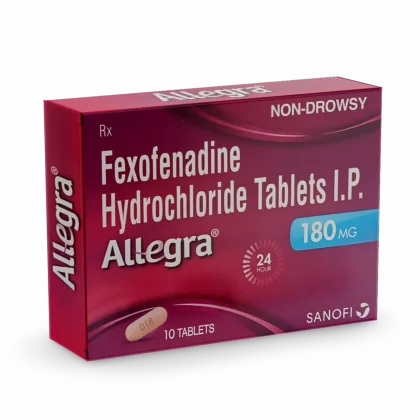
Allegra 180 Mg
Blocks histamine receptors to provide relief from seasonal allergy symptoms without causing traditional drowsiness.
Fexofenadine (Allegra) is a second-generation antihistamine used to manage seasonal allergy symptoms and chronic idiopathic urticaria. Whether you are dealing with hay fever or persistent skin rashes, this medication acts by preventing the body’s allergic response. One formulation is listed below, providing a reliable option for symptom management when you need it most.
Blocks histamine receptors to provide relief from seasonal allergy symptoms without causing traditional drowsiness.
Fexofenadine belongs to a group of medicines called non-sedating antihistamines. Unlike older allergy treatments that frequently triggered feelings of sleepiness, this compound is specifically designed to provide relief while allowing you to maintain your daily focus. It is widely used by people who need predictable control over sneezing, itching, and watery eyes during allergy season.
Because it does not readily cross into your central nervous system, you are less likely to experience the drowsiness commonly associated with other allergy pills. Many people prefer this medication for tasks that require sustained attention because it manages symptoms effectively without the “foggy” side effect profile often seen in different drug classes.
Products containing fexofenadine are managed through varying healthcare regulations across the United States, United Kingdom, Australia, and Canada. In many of these regions, lower-strength formulations are available over the counter, while higher-strength versions may require guidance from a pharmacist or a formal prescription.
Regulation ensures that you have access to the correct concentration for your specific health needs. Since requirements differ significantly between countries, checking the status of fexofenadine in your specific location is a practical first step before adjusting your allergy care routine.
This medication is primarily used to address symptoms of seasonal allergic rhinitis, commonly known as hay fever. It assists with relief from environmental triggers like pollen, dust mites, and pet dander. By easing sneezing, nasal congestion, and itchy or watery eyes, it helps you remain comfortable in environments that would otherwise cause an allergic reaction.
Beyond respiratory allergies, it is also used for the treatment of chronic idiopathic urticaria. In this context, it manages the persistent itching and swelling caused by hives. By blocking the chemical pathways that trigger skin inflammation, it helps soothe irritated skin and reduces the visible symptoms of chronic hives.
Your body releases a natural substance called histamine when it encounters an allergen, which then binds to receptors in your tissues to create swelling and itching. Fexofenadine acts as an antagonist, meaning it sits on those specific histamine receptors so the histamine cannot attach to them.
By blocking these “H1” receptors, the medication stops the chain reaction that leads to your typical allergy symptoms before they become bothersome. Since it focuses on these external receptors, it stays primarily within the bloodstream and surrounding tissues, resulting in a targeted effect that supports your comfort throughout the day.
Fexofenadine is part of the non-sedating antihistamine family, which includes several other modern treatments for allergic conditions. These medicines are characterized by their ability to provide relief while exerting minimal influence on your brain activity. This makes them a standard starting point for anyone requiring long-term management of chronic or recurring allergies.
The chemistry of this class focuses on maintaining high efficacy while removing the sedative traits of older antihistamines. By staying peripheral to your brain’s primary pathways, this group of drugs allows you to address allergic reactions while continuing with work, driving, or other activities that demand natural alertness.
Always confirm that you are not allergic to the components within the tablet. If you have a history of kidney health issues, your body may process and filter this medication differently, which might require a dose adjustment.
While considered non-sedating, some people might still report mild headaches or slight fatigue. These reactions are typically transient, but if you notice unexpected changes in your health, stopping use and speaking with a professional is the standard approach.
Certain juices, particularly grapefruit, orange, or apple, may decrease the absorption of this medicine. It is best to take your tablet with water to ensure consistency. Product labeling and verified clinical sources remain the correct references for specific contraindications, interactions, and potential reactions.
This overview provides educational context regarding fexofenadine and is not intended as medical advice. Individual products containing this ingredient may differ in formulation, strength, and specific usage directions. This page does not authorize clinical application, self-directed interpretation, or unsupervised use of any compound. Always review individual product labeling and speak with a qualified healthcare professional when clinical judgment is needed to address your specific symptoms or health history.