
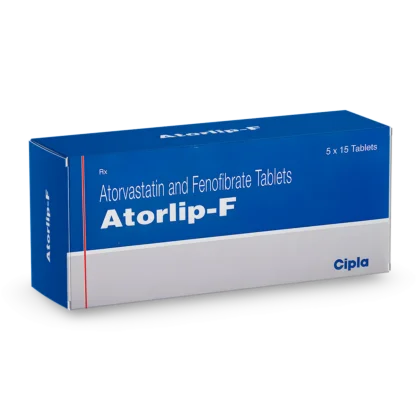
Atorlip F 10+145 Mg
Controls lipid production and lowers triglyceride levels to improve heart health markers and lipid profiles.
Fenofibrate is a medication categorized as a fibrate, widely used to treat abnormal blood lipid levels. It functions by targeting specific pathways in your body that regulate how fats are processed and cleared. Four distinct formulations are listed below, including Atorlip F 10+145 Mg, Lipicard 200 mg, Roseday-F 10, and Rosuvas F 10 Tablet.
Controls lipid production and lowers triglyceride levels to improve heart health markers and lipid profiles.
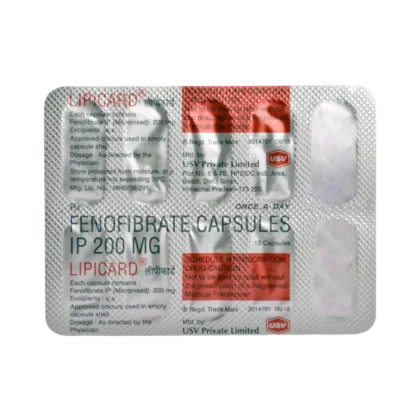
Supports healthy lipid levels by breaking down fats in the bloodstream and reducing triglyceride production.
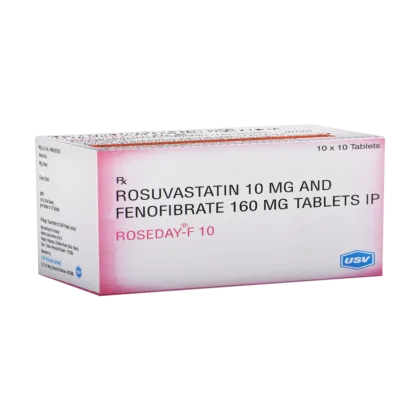
Dual-action combination that lowers harmful cholesterol while targeting high triglycerides to support overall cardiovascular health.
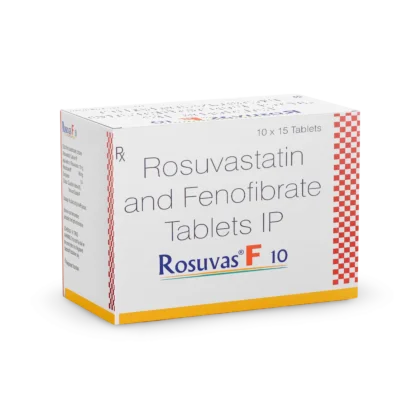
Combined therapy that lowers LDL cholesterol and triglycerides to support cardiovascular health and reduce lipid levels.
Fenofibrate acts as a lipid-lowering agent intended to address elevated levels of triglycerides and low-density lipoprotein (LDL) cholesterol. When your body struggles to maintain healthy lipid levels through lifestyle adjustments alone, this compound steps in to influence the genetic and biochemical markers responsible for fat storage and metabolism. By modifying how your liver handles lipids, you can achieve a more balanced profile that supports long-term cardiovascular health.
Various formulations exist to accommodate different clinical needs and combined therapies. Some versions combine fenofibrate with other cholesterol-lowering agents, such as statins, to provide a multifaceted approach to lipid management. Whether you require a standalone monotherapy or a combination tablet, the diversity of these products reflects the personalized nature of managing chronic lipid disorders.
Products containing fenofibrate are subject to pharmaceutical regulations across the United States, United Kingdom, Australia, Canada, and other global markets. Because this medication affects systemic lipid levels, healthcare providers typically classify it as a professional-use compound that requires a prescription. Regulations ensure that your usage is monitored, as the titration of lipid-lowering drugs requires periodic blood work to confirm the desired therapeutic response.
While the primary indication remains consistent across these regions, the availability of specific brand variations or generic combinations can differ based on local pharmacy storage and distribution guidelines. You should speak with a licensed professional to ensure the specific form you are considering aligns with your current regimen and country-specific access options.
This medication is primarily used to address hypertriglyceridemia, a condition marked by dangerously high levels of fat particles in your blood. By lowering these triglyceride levels, you reduce the underlying stress on your cardiovascular system.
It is also utilized in the management of mixed dyslipidemia, where both cholesterol and triglyceride markers remain persistently high. By normalizing these levels, you manage the progression of lipid deposits in your arteries, promoting better blood flow and reducing the risk of associated complications.
Fenofibrate works by activating the peroxisome proliferator-activated receptor alpha (PPAR-alpha). Think of this receptor as a master switch in your cells that coordinates how your body utilizes and breaks down fats. Once activated, it accelerates the clearance of triglyceride-rich particles from your bloodstream while simultaneously boosting the production of good cholesterol.
Beyond simply clearing fats, this mechanism also reduces the amount of triglyceride-producing proteins generated by your liver. This two-pronged approach—simultaneously increasing internal “cleanup” processes and slowing down the production of fat particles—is what makes this compound effective for lipid regulation.
Fenofibrate belongs to the fibric acid derivative class, often called fibrates. These compounds are structurally and functionally distinct from statins, though they share the therapeutic goal of improving blood-lipid profiles. Fibrates are particularly effective for patients whose triglycerides remain high despite other interventions, as they specifically target the machinery that processes fat molecules.
The class is defined by its ability to modulate gene expression within your liver cells. By turning on specific genes involved in fatty acid oxidation, fibrates change your body’s efficiency at burning and clearing fats. This molecular-level influence provides a metabolic advantage that general dietary changes may not achieve on their own.
Before starting this medication, ensure your doctor is aware of any pre-existing liver or gallbladder conditions. Because fenofibrate exerts its effects on lipid processing through the liver, existing health markers should be reviewed to confirm that it is an appropriate choice.
Individuals may notice gastrointestinal changes, such as mild stomach discomfort or changes in digestion, when beginning therapy. Monitoring how your body adapts over the first few weeks is standard. While serious reactions are rare, any unexplained muscle tenderness or skin irritation should be reported to a professional to determine if an adjustment is necessary.
Fenofibrate can interact with blood thinners, certain anti-diabetic medications, and other lipid-lowering drugs. If you are currently taking other therapies for heart or metabolic health, provide a comprehensive list to your provider to avoid overlapping effects. Product labeling and verified clinical sources remain the correct references for specific contraindications, interactions, and potential reactions.
This information provides an educational overview of fenofibrate and is not medical advice. Individual products containing this ingredient may differ in formulation, strength, and directions for use. This page does not authorize clinical application, self-directed interpretation, or unsupervised use of the medications listed. Please review the specific labeling provided with your product and speak with a qualified healthcare professional when clinical judgment or therapeutic interpretation is needed.