
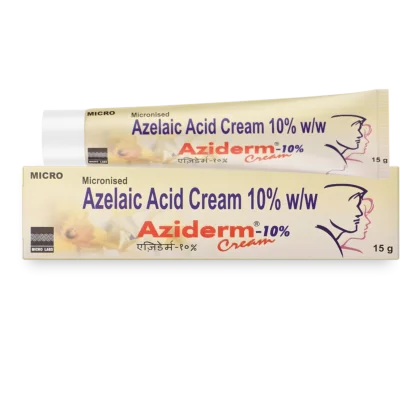
Aziderm Cream 10 % (15 gm)
Directly combats acne-causing bacteria and reduces surface inflammation to clear breakouts and even out skin tone.
Azelaic acid is a naturally occurring dicarboxylic acid found in grains like barley, wheat, and rye. It acts as a powerful agent for skin health by balancing cellular turnover and neutralizing surface bacteria. Two formulations are listed below — Aziderm Cream 10% and Aziderm Cream 20% — representing common concentrations used for topical care.
Directly combats acne-causing bacteria and reduces surface inflammation to clear breakouts and even out skin tone.
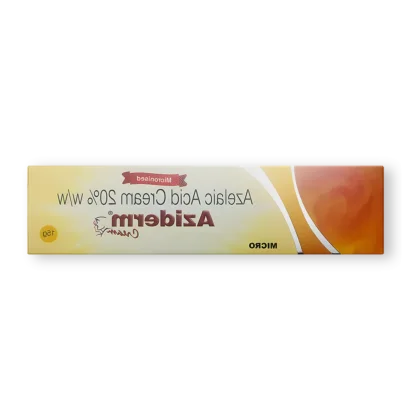
Reduces acne-causing bacteria and calms skin inflammation to improve texture and clear up uneven pigmentation.
Think of azelaic acid as a gentle but effective workhorse in your skincare routine. It is a naturally occurring compound that works by normalizing how your skin cells shed their outer layers. When those cells clump together, they often block pores and lead to outbreaks, but this ingredient keeps that process moving smoothly.
Beyond its texture-improving capabilities, it offers distinct biological actions. It naturally dampens the inflammatory pathways that cause redness or flare-ups. Because it is milder than many synthetic skin treatments, it has become a staple for individuals looking to address persistent skin concerns without the harsh drying effects often caused by other topical compounds.
Products containing azelaic acid fall under various regulatory frameworks across the globe. In many markets—including those within the United States, United Kingdom, Australia, and Canada—lower concentrations are often found in cosmetic preparations, while higher-strength versions are typically regulated as pharmacy-grade treatments.
Regulations change depending on the intended use and the specific concentration involved. Because these preparations can have a meaningful impact on your skin barrier, you will find that online pharmacy access varies. It is always wise to review the local standards in your specific region when considering which strength is appropriate for your individual needs.
This ingredient is primarily used to address acne and rosacea. By reducing the number of bacteria that thrive in hair follicles, it helps clear up active blemishes while preventing new ones from forming. It also assists in fading the dark spots or uneven pigmentation that often persist long after a breakout has resolved.
When used to manage rosacea, it works by calming the skin’s reactivity. Many people find it helpful for reducing the persistent redness and bumps associated with this condition. It is generally well-tolerated by those with sensitive skin, making it a reliable choice for long-term skin maintenance and clarifying complexions.
Azelaic acid works by directly inhibiting the growth of skin bacteria and limiting the production of proteins that cause skin irritation. When you apply it to the surface, it penetrates into the pore to break down the buildup of dead skin cells. This prevents the clogs that eventually turn into pimples or blackheads.
Additionally, the compound acts as a mild exfoliant. By thinning the buildup of the outermost layer of your skin, it promotes a smoother texture and helps prevent melanin from clumping. This dual-action approach is why it is effective at both clearing active congestion and smoothing out overall skin tone.
As a dicarboxylic acid, this compound belongs to a class of naturally occurring substances known for their antimicrobial and anti-inflammatory properties. These compounds are structurally simpler than many complex synthetic drugs, allowing them to integrate into your skin’s biological pathways with minimal interference.
The class is defined by its ability to modulate the skin’s micro-environment rather than just targeting a single symptom. By shifting the internal chemistry within your pores and neutralizing surface triggers, these agents offer a comprehensive way to manage skin health. This makes them a preferred choice for sustained dermatological support.
Always perform a small patch test on your skin before applying it to larger areas to check for potential sensitivity. If you have a history of severe skin conditions or known allergies to any ingredients in the base cream, review the packaging carefully.
You might experience mild stinging, itching, or dryness when first starting the treatment. These sensations typically subside as your skin adjusts to the acidity of the cream. Avoid applying it to open wounds, severely broken skin, or surfaces that are already inflamed from other treatments.
Be cautious if you are already using other potent exfoliants or strong topical agents, as using multiple products at once may overwhelm your skin. If you are pregnant or breastfeeding, verify with a professional whether this topical approach is suited for your specific situation. Product labeling and verified clinical sources remain the correct references for specific contraindications, interactions, and potential reactions.
This page provides an educational overview of azelaic acid for research purposes and does not constitute medical advice, diagnosis, or treatment. Individual products containing this ingredient may differ in their specific formulation, concentration, and directions for use. This page does not authorize clinical application, self-directed interpretation, or unsupervised use of any listed preparation. Readers should review individual product labeling and speak with a healthcare professional when clinical judgment regarding skin health is needed.